


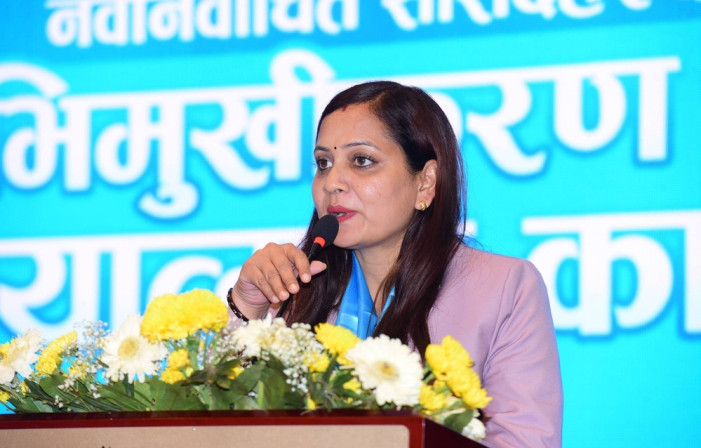


Kathmandu — Nisha Mehta, who once served patients wearing a white apron, has now taken charge as the Minister for Health and Population. A Member of Parliament from the Rastriya Swatantra Party (RSP), Mehta has been entrusted with the responsibility in the cabinet led by Prime Minister Balendra Shah (Balen).
Born in Inaruwa, Sunsari, Mehta spent years working directly in hospitals, providing care to patients in wards. She holds a postgraduate degree in Nursing from a university in Gwalior, India. She worked as a clinical nurse for around three years at BP Koirala Institute of Health Sciences in Dharan before transitioning into academia. She later served as a lecturer in nursing at the Nobel Medical College in Biratnagar.
With extensive hands-on experience in the healthcare sector, Mehta now steps into policymaking with the goal of reforming Nepal’s health system. She has expressed her commitment to effectively implementing health policies and laws while ensuring accessible and affordable healthcare services for all.
In the 2022 elections, she was included in the proportional representation list but did not secure a seat at that time. However, she remained active within the party and continued her involvement in organizational activities, later serving as a central committee member of RSP. She has been associated with the party since its early days as an ordinary member and has remained consistently engaged in party activities.
Mehta was still actively involved in healthcare services even on the day she received her parliamentary certificate. Alongside politics, she has contributed to social work as well. As the Administrative Secretary of the Police Wives’ Association in Koshi Province, she played an active role in organizing health camps, women- and child-focused programs, and community-based initiatives.
Her husband, Dr. Saroj Singh, is the chief of the Koshi Province Police Hospital and holds the rank of Deputy Superintendent of Police (DSP).
Elected under the Madhesi cluster through proportional representation, Mehta has been vocal about issues concerning Madhesi women, healthcare access, and social justice.
Nepal’s healthcare sector has long faced challenges related to resources, accessibility, and management. Experts point to issues such as inadequate public investment in health, the migration of medical professionals abroad, inefficiencies in health insurance programs, and unequal access to services.
Mehta now faces both opportunities and challenges, including improving health insurance implementation, addressing workforce shortages, enhancing hospital services, and increasing government investment in healthcare. Experts emphasize that reforms in policy, financing, digital systems, governance, and transparency are essential to strengthening Nepal’s health system.
Her leadership also presents an opportunity to review and update existing health policies, ensuring effective implementation and alignment with changing health needs.
